
The automobile industry in the world is in the process of a very impressive revolution in 2025 whereby luxury and electric mobility no longer form two different worlds – they have already become one and the same dynamic world. India, which was viewed as a slow market in terms of electric mobility, is currently turning into an important luxury EV market due to new policies by the government, the presence of high-net-worth individuals, and the increasing interest in the sustainability aspect.
This change does not simply involve the replacement of fuel by electric, but rather a re-invention of the concept of luxury, combining power, noiselessness, technology and sustainability into a single beautiful cask. This is the blog to read in case you want to learn the direction the luxury car market in India is moving.
A fast-changing Luxury EV Market
Luxury electric vehicles were until recently a niche product. However, as of 2025, the market has different stories.
More than 2,000 luxury EVs were sold in India during the first five months of the year alone which is an increase of 66 percent per year. Better still, EVs have over 10 percent of the total luxury cars sold against 7 percent last year.
This boom is an indication of evolving tastes among consumers in that the high-end consumers are seeking performance and purport, in which driving excitement intersects with environmental awareness.
The Policy Push Behind the Boom
One of the key driving factors behind this change has been the new policy by the Indian government to import EVs which lowers import duties of approximately 100 percent to only 15 percent of qualifying car manufacturers.
In order to take advantage of this privilege, the car manufacturers are required to invest USD 500 million (or approximately [?]4,150 crore) within a span of three years to set up plants in India to produce or assemble cars.
This step has enabled foreign manufacturers such as Tesla, BYD and VinFast and established European manufacturers such as Mercedes-Benz, BMW and Audi to increase their electric product range in India.
To the consumers, this policy is a single thing that is, increased options at competitive prices and supported by rapid local production and superior after sales services.
Luxury Electric Giants On the Frontline
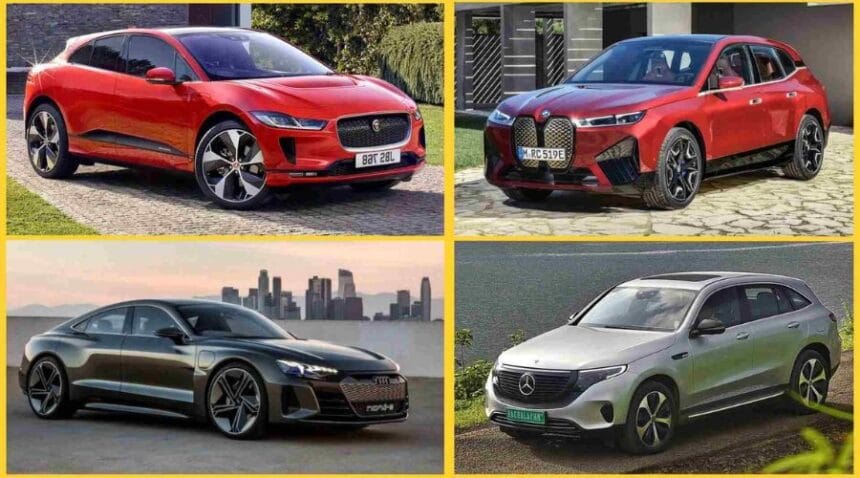
Mercedes-Benz India is at the leading position since the increase in sales of luxury EVs has reached 73 percent as of 2025. The EQ series of the brand, specifically, the EQS SUV and EQE, has left a mark on the Indian customer with the highest level of comfort, futuristic interiors, and real-world range over 600 km.
BMW is not much behind as their i7, iX and i4 models are gaining popularity among the customers who want to experience sportiness and efficiency. In the meantime, the e-tron series made by Audi has been catering to the needs of the audience that cares about performance and brand image.
And last but definitely not least, there are new players such as Xiaomi and BYD that are increasing the competitive pressure by providing high-end features at a slightly lower price making a luxury EV more affordable.
Xiaomi enters the Fray of Smartphones to Supercars
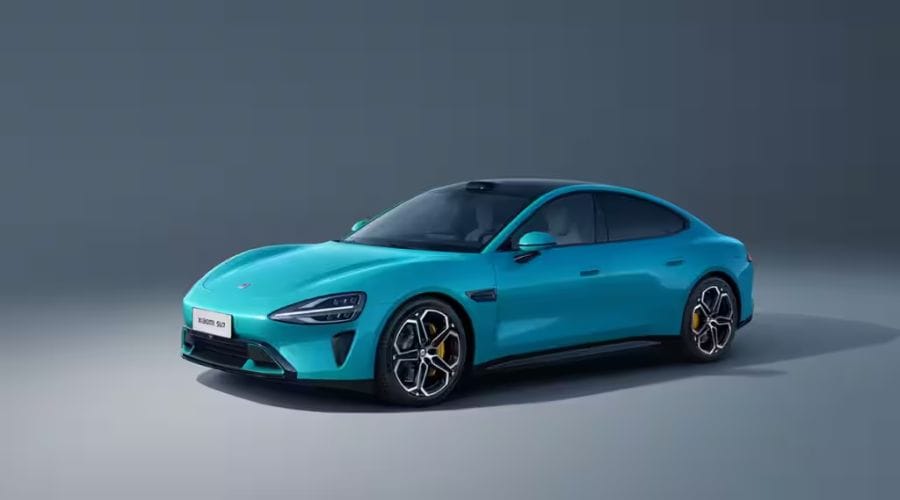
One of the largest shocks of the decade was the entrance of tech brands into the EV business.
Xiaomi, a Chinese firm, has finally taken a step into the EV and offers its SU7 electric SUV, equipped with sophisticated AI and intelligent connectivity – features that are aimed at the new generation of luxury consumers.
Its introduction presupposes a new period when the world of technology and cars are becoming one that will define the concept of luxury ownership.
Software-Defined Luxury Cars on the Rise
The luxury no longer is about leather interior and chrome trim, but rather about software, automation, and smartness.
It is now possible to have Level 3 autonomous systems, voice-activated interiors, cockpit-style dashboards, and designs of modern luxury EVs that are closer to spacecraft than traditional vehicles. The new Drive Pilot system introduced by Mercedes-Benz, e.g., enables hands-off driving under certain conditions, which is a new standard of safety and convenience.
The aerospace-inspired advances, AI-driven assistants, and real-time driving analytics are transforming every drive into a technology-filled and immersive experience.
India’s Long-Term EV Roadmap
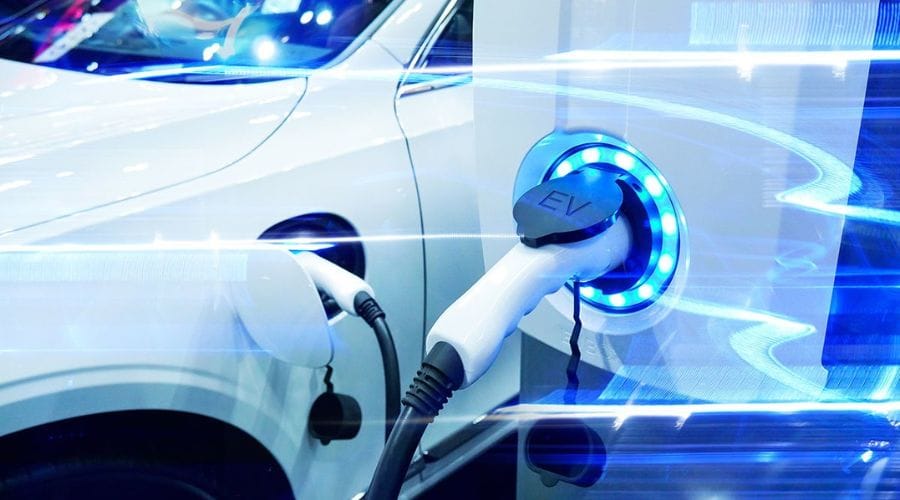
Car manufacturers of luxury are not merely selling electric cars, but creating an ecosystem around them.
Such brands as Mercedes-Benz and BMW are increasing their fast-charging infrastructure, meaning that all major cities and highways will become EV-friendly.
Mercedes has a target of converting 25% of its Indian portfolio into fully electric by 2026, and BMW will assemble to produce more EVs locally to lower costs and delivery time.
The focus now is on:
- Enhancing charging facilities.
- Skilling an electric vehicle workforce.
- Enhancing the range with solid-state batteries and quicker charging.
All this proves that the luxury EV change in India is not a fad of the moment, but a gradual transformation.
What This Means for You
It is the right time to those who are car enthusiasts, early adopters and those, who plan to invest in a premium EV.
You can expect:
- Lower entry barriers because of subsidized importation of duties.
- Additional luxury products of international brands.
- Improved infrastructure and convenience to charge.
- Increased resale value with EV adoption.
Not only luxury market is being redefined by this wave, but the way Indians view cars is being changed as well; luxury cars may be viewed no longer as a symbol of status, but as an intelligent and sustainable way of life.
Conclusion
By the year 2025, the boundaries between performance, luxury and sustainability are going to be unclear – a new era of electric mobility is going to become the hallmark of automotive excellence. The Indian luxury EV market is speeding up more than ever before with brands such as Mercedes-Benz, BMW, and Tesla dominating the market and the government policies creating the roadmap towards local manufacturing. This revolution is not merely a technological and status thing but a smarter, cleaner, and more connected driving experience. With the future of innovation moving on, luxury cars are no longer in the form of a vehicle, it is the future of mobility, combining sophistication and sustainability that is the modern Indian consumer.