
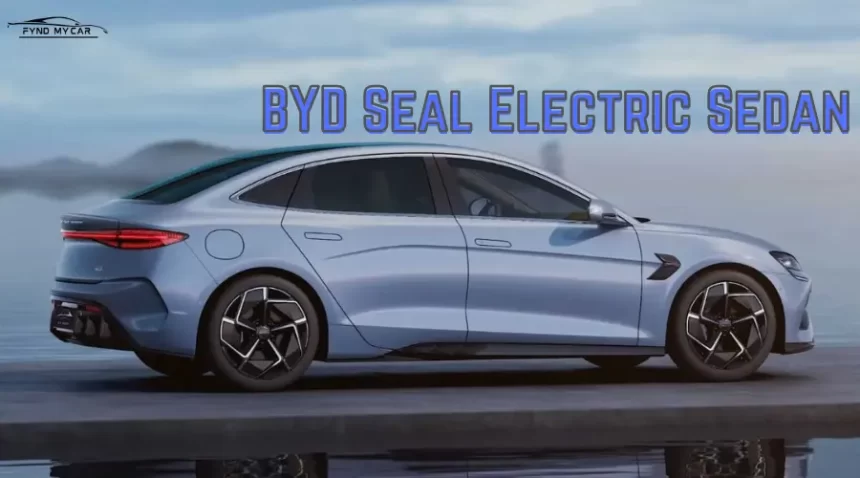
BYD Seal electric sedan is causing people to turn their heads in India and elsewhere with its unexpected combination of performance and luxury and range. The Seal is not an ordinary budget electric vehicle but rather feels like one in that it has a sleek fastback shape, sportiness on the road, and is well-equipped in its cabin and interior. Simultaneously, BYD has made it affordable enough, so that it can be accessible to serious EV purchasers who require sophistication and usefulness.
Critical Specifications and Performance
| Specification | Dynamic (RWD) | Premium (RWD) | Performance (AWD) |
|---|---|---|---|
| Battery Capacity | 61.44 kWh | 82.56 kWh | 82.56 kWh |
| Motor / Drivetrain | Single rear motor, RWD | Single rear motor, RWD | Dual motors, AWD |
| Power (Rear / Combined) | ~204 hp (~150 kW) | ~313 hp (~230 kW) | ~523 hp (~390 kW) combined |
| Torque | ~310 Nm | ~360 Nm | ~670 Nm |
| 0–100 km/h Acceleration | 7.5 s | 5.9 s | 3.8 s |
| Range (Claimed) | 510 km (NEDC) | 650 km (NEDC) | 580 km (NEDC) |
| Charging (AC / DC) | 7 kW AC → ~12 h; 110 kW DC for Dynamic | 7 kW AC → ~12–16 h; 150 kW DC for Premium/Performance | 7 kW AC; 150 kW DC for Performance |
| Battery Type | Blade LFP | Blade LFP | Blade LFP |
| Ground Clearance | ~145–149 mm (varies by variant) | ||
| Top Speed | ~180 km/h | ||
| On-road Price (India, ex-showroom) | ₹ 41.00 lakh | ₹ 45.70 lakh | ₹ 53.15 lakh |
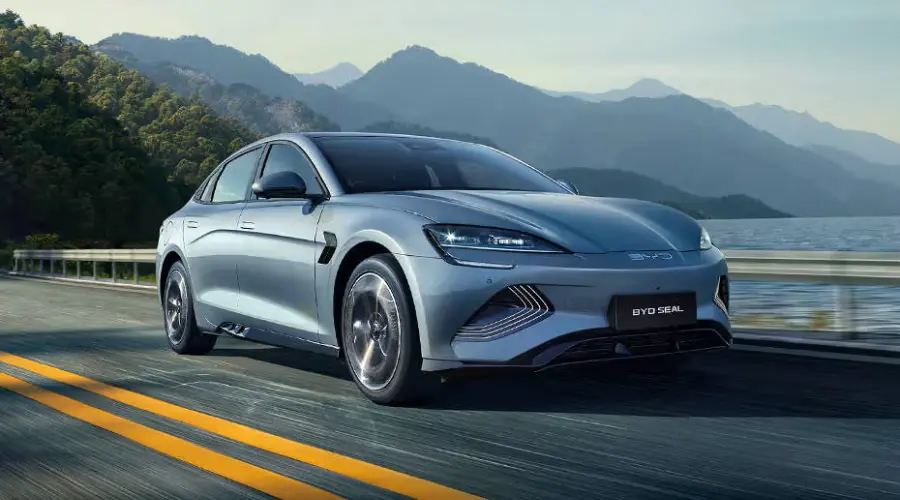
The Seal is based on the BYD platform 3.0 e-Platform and comes in two battery options, including a 61.44 kWh pack and a bigger 82.56 kWh pack, which the company refers to as the Blade battery. These packs drive various versions and greatly affect performance and range of driving. The smaller battery is combined with one rear-mounted motor which generates approximately 204 hp and 310 Nm of torque, and the base model can accelerate to 0-100 km/h in approximately 7.5 seconds. The bigger battery is available in RWD and AWD versions: the former is called Premium and increases the power to approximately 313 hp, with a 0-100 km/h time of approximately 5.9 seconds, whereas the latter is dubbed Performance and has up to 530 hp and 670 Nm to be able to accelerate to 0-100 km/h in 3.8 seconds.
Range is equally impressive. The range will vary between 510 km and 650km on a full charge depending on the variant, which makes the seal good not only in commuting in a city but also in longer distances. To charge, the car will support fast DC charging (up to 150 kW) and this greatly shortens the charging time – it is reported to take around 40-45 minutes to charge the larger battery 10 to 80 percent. On the contrary, AC charging is slower, and the full charge with the help of a 7 kW home charger may require several hours.
Design, Comfort & Interior
With regard to design, BYD seal adopts a smooth oceanic philosophy. It has a low drag coefficient (of approximately 0.219) that favours efficiency and high-speed stability. Pop-out door handles, LED daytime running lights and large 19-inch aero wheels on the outside bring about the sporty look.
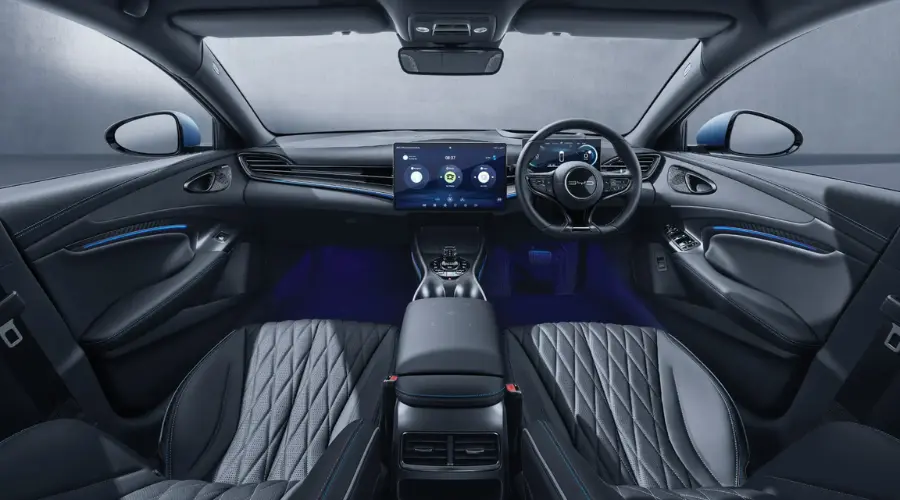
The cabin is modern and luxurious to step in. The interior is in a minimalist theme of ocean in quilted vegan leather and soft suede accent. The most prominent feature on the dashboard is a 15.6-inch rotating touchscreen with a 10.25-inch digital instrument cluster to the driver. The front seats are powered with fans and heat and there are two wireless charging pads, a panoramic glass roof that has a power sunshade and a high-quality sound system, which makes the experience higher.
BYD has also listened to the practicality aspect – there are concealed air vents, satin-finished controls, and even a crystal-gear shift that is futuristic and sophisticated at the same time.
Safety & Driving Assistant
The Seal is strong as far as safety is concerned. The car is constructed on a firm basis and takes advantage of the already existing crash protection of its e-Platform 3.0. The Blade Battery has high thermal stability and this provides an added protection in the case of impact. To help the driver, BYD has a full package: adaptive cruise control system, lane-keep assistant, blind-spots monitor, front and rear collision warning system, along with autonomous emergency braking. A 360-degree camera and cross-traffic alert make parking and maneuvering an easier task.
Pricing & Market Position
The BYD Seal EV is a high-end electric sedan in India. By 2025, the ex-showroom prices are estimated to be as high as ₹41 lakh on the entry level RWD (Dynamic) to up to ₹53.15 lakh on the highest-end Performance AWD. This price range puts the Seal in direct competition with other high-end EVs but a good value proposition as it has good performance, battery technology, and build quality.
Another model that BYD has upgraded with comfort- and tech-related features is the 2025 model, which has a power sunshade, upgraded air conditioning, and improved suspension to improve the ride quality. These improvements make it more advanced and sophisticated than previous models.
Competencies and possible weaknesses
The performance-oriented version of AWD is one of the strongest advantages of the Seal, as it provides the acceleration of a sports car and ensures the efficiency of an EV. It can be used to cover a long distance and not only commuting in the city, as the larger battery also provides great usability in the long term. The high quality interior and high safety score also enhances its attractiveness.
However, this does not necessarily mean that the range of a real-life situation would be different, as all of the stated numbers that BYD boasts about are entirely optimistic, meaning that high-speed driving or under extreme conditions can decrease the efficiency. The AC charging time is rather long, thus in the areas where fast DC chargers are not very concentrated it might be a disadvantage. Moreover, the price of the highest-end Performance model is rather high, and the service or maintenance of a dual-motor EV may be more expensive than the simpler EVs or hybrids.
To Whom Should the BYD Seal Be of Interest
- Those drivers who desire an EV sedan that is luxurious but has the performance that counts.
- Customers who have access to DC fast charging or a decent home-charging set-up.
- Individuals interested in long-range EVs without having to compromise with quality.
- EV people who appreciate sporting driving experience
- Ultra-premium purchasers who desire good safety, comfort, and contemporary design all in a single unit.
Final Thoughts
The BYD Seal 2025 is a statement of force. It is not just some sort of efficient electric car, but it is a performance machine in a high-end package. The Seal has a strong argument in being one of the best EV sedans currently in the market with its long-range battery option, sporty AWD variant, or luxurious interior.
Provided that it occurred to you in serious that an EV with soul and substance is what you need, the Seal is worth a test drive. It may also become the electrically driven sedan that establishes a new standard to those who are ready to invest in its premium trims.
FAQ
Q. What is the driving range of the BYD Seal?
A. The 2025 BYD Seal offers an estimated range between 510 km and 650 km (depending on the variant and battery size), making it suitable for both city and long-distance driving.
Q. How fast is the BYD Seal?
A. The top-spec AWD variant can accelerate from 0–100 km/h in just 3.8 seconds, while the base RWD model does it in around 7.5 seconds.
Q. What are the charging options?
A. It supports fast charging up to 150 kW, allowing 0–80% charge in about 40–45 minutes, along with standard AC home charging.
Q. Does the BYD Seal have advanced safety features?
A. Yes, it includes ADAS with adaptive cruise control, lane assist, emergency braking, blind spot monitoring, and multiple airbags.
Q. How much does the BYD car cost in India?
A. As of 2025, prices range from ₹41 lakh for the base model to ₹53.15 lakh for the top-end Performance AWD variant (ex-showroom).