

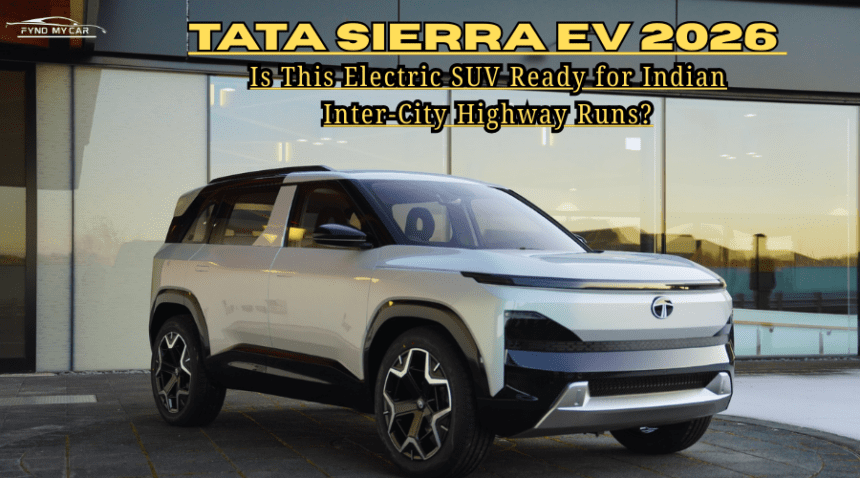
Have you ever wondered whether an electric SUV can truly handle long inter-city highway trips across India without making you anxious about charging stops? I’ve asked myself the same question many times.
As electric cars become more common, the idea of driving from Delhi to Jaipur or Mumbai to Pune in an EV no longer feels unrealistic. That’s exactly why the return of the Tata Sierra EV is generating so much curiosity.
This SUV brings back a legendary name from the past but in a completely modern electric form. The big question: can it really manage long highway drives comfortably and confidently? Let’s take a closer look and see whether this electric SUV is truly ready for India’s inter-city journeys.
Tata Sierra EV 2026 Review: Range And Performance
When we talk about long highway drives in an electric vehicle, two things matter more than anything else: how far the car can travel on a single charge and how comfortably it performs at highway speeds. If an EV delivers a solid range and smooth performance, it becomes much easier for you and me to trust it for longer trips between cities.
Significant Real-World Range
If you ask me, the first thing most people worry about before buying an electric SUV is the driving range. Nobody wants the stress of constantly searching for a charging station during a highway journey. The Tata Sierra EV is expected to offer an official driving range of around 450-550 km, depending on the battery pack you choose. On paper, that already sounds impressive. However, real-world driving conditions in India are always a little different from those in testing. Traffic, road conditions, air-conditioning use, and driving style all affect how far the car actually goes.
In everyday situations, the realistic, usable range could be around 320-420 km. Even with that number, highway travel becomes much more practical. For example, if you plan a trip from Delhi to Chandigarh or Bengaluru to Mysuru, the journey could easily be completed with just one charging stop along the way. That kind of range starts making electric SUVs feel less like city-only cars and more like true road-trip companions.
Battery And Power
Under the floor of the Tata Sierra EV sits the battery pack, which works like the fuel tank in a petrol or diesel car. According to the Tata Sierra EV 2026 review, the SUV is expected to offer battery options ranging from roughly 55 kWh to 69 kWh. In simple terms, a larger battery stores more energy, allowing the vehicle to travel longer distances. This is one of the main reasons why electric SUVs are becoming more capable for longer trips.
Power also plays a big role in how enjoyable a car feels on the highway. Reports suggest the Sierra EV could deliver power ranging from about 170 bhp to 238 bhp, depending on the variant. For an SUV in this category, that level of power should feel quite strong. From my perspective, this means highway overtakes should feel smooth and easy, not stressful. Electric motors also deliver power instantly, which means the car responds quickly when you press the accelerator.
Highway Speeds
Driving on highways requires stability and confidence. As per the latest car news, the Sierra EV is expected to have a top speed of around 160 km/h and could accelerate from 0 to 100 km/h in roughly eight to nine seconds, depending on the version. What matters more is that the car feels stable and relaxed at normal cruising speeds like 90 to 110 km/h. Electric vehicles usually deliver very smooth power delivery, which helps make long drives feel calm and quiet. Imagine cruising on a highway early in the morning, with minimal motor noise. That peaceful driving experience is one of the biggest advantages of electric cars.
Fast Charging
Charging time used to be the biggest worry for electric vehicle buyers, especially for people who love long road trips. But charging technology has improved significantly over the last few years. The Sierra EV is expected to support fast charging, which can bring the battery from about 10 percent to 80 percent in roughly 35 to 40 minutes. When you think about it practically, that charging stop might not feel like a delay at all.
During a highway journey, most people already stop for tea, coffee, or food breaks. By the time you stretch your legs and grab a snack, the car could already be mostly charged and ready to continue the trip. At home, charging will naturally take longer. Overnight charging may take around eight to nine hours, which is perfectly fine since the car can simply charge while you sleep.
Drivetrain Options
Another interesting aspect of the Sierra EV is the possibility of different drivetrain options. The standard version may use a single electric motor that powers the front wheels. This setup focuses more on efficiency and everyday practicality. However, higher variants could feature a dual-motor setup that powers all four wheels. This kind of system improves traction and driving confidence, especially in rain, on rough roads, or on hilly terrain. If you enjoy road trips to mountain destinations or places with challenging roads, that extra grip can make a noticeable difference. It gives the driver more control and stability during long journeys.
Tata Sierra Electric SUV India: Long Distance Suitability
Range and performance are important, but long highway drives depend on more than just numbers. Comfort, interior space, smart features, and charging support all play a major role in determining whether a car is truly road-trip friendly.
Platform And Comfort
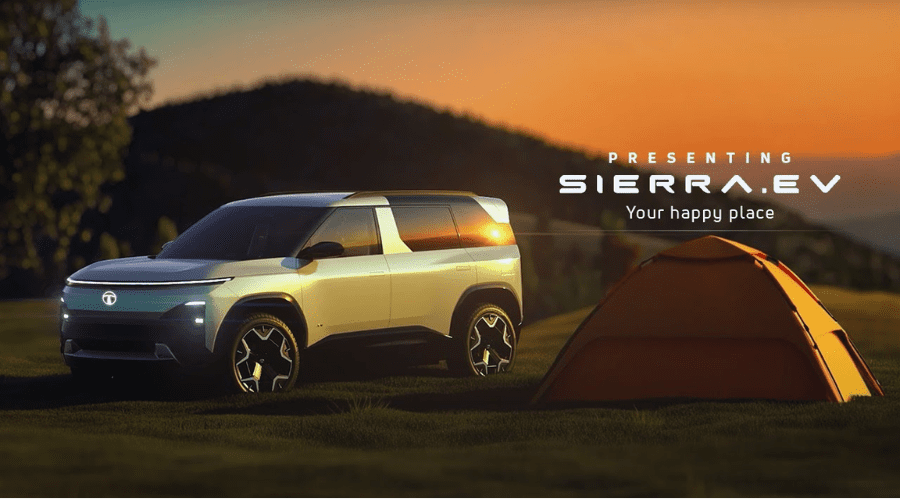
The Tata Sierra EV is expected to be built on a dedicated electric vehicle platform developed by Tata Motors. As this platform is designed specifically for electric cars, it offers certain advantages over traditional petrol-based designs. For starters, the battery is placed under the floor, which helps create a flat cabin layout. This usually means more legroom for passengers and better space inside the vehicle.
Comfort becomes extremely important during long journeys. Spending five or six hours in a car can quickly become tiring if the seating or cabin space is poorly designed. The Sierra EV is expected to offer spacious seating and, in some versions, a lounge-style interior layout. If you’re traveling with family or friends, that extra space can make the drive feel much more relaxing.
Advanced Features
Modern SUVs are no longer just about driving from one place to another. They are also about comfort, convenience, and technology that improves the travel experience. According to the latest car news, the Sierra EV is expected to include a large touchscreen display, wireless smartphone connectivity, voice controls, and several smart features that make everyday driving easier.
Safety is another important factor for long highway journeys. Reports suggest the SUV may feature advanced safety technology, including multiple cameras and intelligent driver assistance systems. These systems help drivers stay aware of their surroundings and can reduce fatigue during long drives. For someone like me who enjoys road trips, these features make the journey feel smoother and less stressful.
Infrastructure Support
Perhaps the biggest question surrounding electric vehicles is the charging infrastructure. Without reliable charging stations, long-distance travel becomes difficult. Fortunately, India’s charging network is expanding rapidly. Charging stations are now appearing along major highways, at hotels, shopping centers, and even fuel stations. Many companies are actively investing in expanding this network nationwide.
This means planning an EV road trip is becoming easier than ever. With route-planning apps and charging-station maps, you can easily identify where to stop for a quick recharge. As the charging ecosystem continues to grow, electric highway travel will likely become as normal as driving petrol- or diesel-powered cars today.
Final Thoughts
With a realistic driving range that comfortably exceeds 350 km, smooth electric performance, fast-charging capability, and a spacious cabin, the SUV appears designed for both city commuting and highway travel. The dedicated electric platform, modern technology, and improved charging infrastructure all add to its practicality. Personally, I feel the Tata Sierra Electric SUV India could become one of those vehicles that finally convince many people that electric SUVs are no longer just city cars. And if things go as expected, the next time you and I plan a weekend highway drive, doing it silently in an electric Sierra might actually feel like the perfect road-trip experience.
FAQ
1. What is the expected range of the Tata Sierra EV on a full charge?
A. The Tata Sierra EV is expected to offer a driving range of around 450 km to 550 km on a full charge, depending on the battery version. In real driving conditions, the usable range may be slightly lower, but it should still comfortably support inter-city trips with minimal charging stops.
2. Can the Tata Sierra EV handle long highway journeys in India?
A. Yes, it is being designed with long-distance travel in mind. With its expected range, fast-charging capability, and comfortable cabin, the SUV should be able to handle highway drives between cities without major inconvenience.
3. How long will it take to charge the Tata Sierra EV?
A. With fast charging, the battery is expected to charge from around 10% to 80% in roughly 35 to 40 minutes. Home charging will take longer, usually around 8 to 9 hours, which most owners will likely do overnight.
4. Will the Tata Sierra EV have all-wheel drive?
A. Reports suggest that the base version may come with a single motor powering the front wheels, while higher variants could offer a dual-motor setup for all-wheel drive. This setup can improve traction and stability, especially during long highway trips or on rough roads.
5. When is the Tata Sierra EV expected to launch in India?
A. The Tata Sierra EV is expected to launch in India around 2026. Once launched, it will join Tata Motors’ growing electric lineup and compete with other upcoming electric SUVs.