
The automobile industry of the world is in the decisive decade, and the core of it is the revolution of electric vehicles (EV). Previously viewed as a niche and a futuristic option, EVs are now approaching the mainstream status of a choice of millions of buyers across the world. As governments continue to increase their restrictions on emissions, car manufacturers spend billions on new technology, and the consumers seek sustainable options, it has never been a better time to see the promise of electric vehicles in 2025.
This is not simply the substitution of petrol and diesel engines with batteries. It is about redefining mobility, the way we drive, how we charge and even what we think of mobility.
A Battery Technology Breakthrough

The batteries are still the most important part of electric vehicles and the improvements that are being done in this sector will determine the rate of EV adoption. The current market is still dominated by lithium-ion batteries, although solid-state batteries can be seen as the next step to great milestones. With increased energy density, shorter charge times and enhanced safety, they can extend EV range past 600 km per charge.
The other major innovation is the transition to recyclable and sustainable battery materials. Automakers and researchers are in the process of minimizing reliance on rare minerals such as cobalt which is costly and difficult to extract in an environmentally friendly manner. Practically this implies that EVs will shortly not only be more efficient but also more eco-friendly in their lifecycle in general.
Energizing Infrastructure takes a back seat

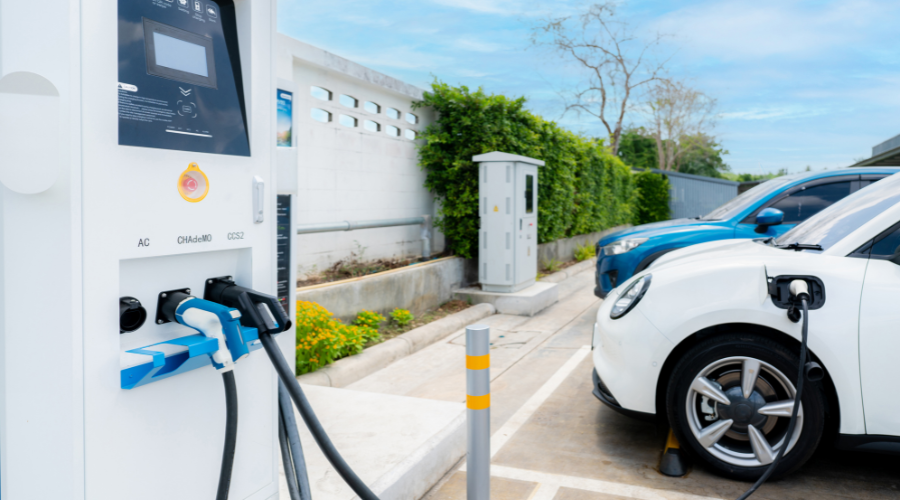
In most instances, new buyers are not interested in range, but the convenience of charging. That is why governments, private corporations, and car manufacturers are investing in the creation of strong networks of chargers. In 2025, there should be ultra-fast charging stations along highways and in cities that will be able to add hundreds of kilometers within half an hour.
Cities are also testing wireless charging pads and smart charging systems, which easily connect to renewable energy grids. Vehicle -to- grid (V2G) is also being piloted, in which parked EVs can supply power to the grid when the demand is high. The combination of these changes will result in less range anxiety and ownership of EVs as easy as a smartphone.
Making Electric Cars More affordable

Affordability is one of the most dominant trends of the future of electric cars. In the not distant past, EVs had been equated with luxury buyers, but the declining cost of the batteries and economies of scale are rapidly altering the game. EVs are being developed in mass-market and at similar prices as conventional cars.
Compact EVs are being introduced into markets like India and Southeast Asia in the ₹10 lakh ($15,000) category and hence affordable to middle-class households. Combined with government subsidies, tax rebates and reduced running costs, the financial argument of an EV is better than ever. Such democratization of technology of EV will speed up the use of the technology in developed and developing economies.
AI and Smarter Connectivity

The future of EVs does not merely lie in cleaner energy but also driving experiences that are intelligent. Artificial Intelligence is changing the way such cars work and perceive their surrounding. New EVs currently have AI-controlled battery management technology, which reduces power consumption and increases battery life.
Connection is also becoming a normal feature. OTA updates are those that make cars remain up-to-date without having to go to a service station. Live traffic notifications, automatic routing to the closest charging station and semi-autonomous driving capabilities are transforming EVs into networked digital environments. In other words, EVs themselves are changing into intelligent companions of the road.
Increasing Market Share and Expanded Customer Choice

The year 2025 will probably be a significant turning point in the acceptance of EVs. Analysts estimate EVs may constitute 20 to 25 percent of all new cars sold worldwide with some countries such as China and some in Europe being on the forefront of the transition. Automakers are also addressing this need with an onslaught of new models – compact city models and SUVs, business fleets and high-performance sedans.
This broad consumer preference is important. Be it a commuter car with lower costs or a high-end luxury EV, soon enough there will be a choice in all the segments. Automakers competition is also providing innovation as companies are being forced to perform better, range longer and offer more appealing prices.
Key Trends in a Glance
| Trend | Impact on 2025 EV Market |
| Battery Technology | Longer ranges, faster charging, recyclable materials |
| Charging Infrastructure | More ultra-fast chargers, wireless charging, V2G systems |
| Affordability | Budget-friendly EVs, subsidies, accessible to middle-class buyers |
| AI and Connectivity | Smarter battery use, OTA updates, semi-autonomous driving |
| Market Growth and Choice | 100+ new models worldwide, from compact EVs to luxury SUVs |
Challenges That Remain
The way to mass adoption is not all the way smooth in spite of the blistering development. The recycling and disposal of the battery are still the fields that require immediate action to make EVs really sustainable. Electricity grid in most areas will also be strained by increasing EV demand unless renewable integration increases at the same rate. Even with declining initial costs, they remain higher than traditional cars in a number of markets and therefore may be slow to be adopted by buyers with low budgets.
Final Thoughts
Based on the trends, it becomes obvious that the future of electric cars is quickly shifting not to the next day but to the present reality. By 2025 EVs will be better green and also smarter and more affordable and distributed across all segments. The EV revolution will take place at an even quicker pace than ever before with enhanced batteries, quicker charging systems, artificial intelligence, and lower prices.
The transition to electric is not a matter of switching the power source of our cars. It is all about re-butter-thinking mobility itself – making transportation cleaner, smarter and more sustainable to the generations to come
FAQ
1. What makes 2025 a significant year for electric vehicles?
A. 2025 marks a turning point as advancements in battery technology, charging infrastructure, and affordability make EVs more mainstream and widely accessible.
2. Will EVs become more affordable?
A. Yes. Falling battery costs, government incentives, and mass production are making EVs more budget-friendly for everyday consumers.
3. How is charging infrastructure improving?
A. Fast-charging stations, wireless charging, and integration with renewable energy sources are rapidly expanding worldwide.
4. Are EVs getting smarter?
A. Absolutely. AI and connectivity are enabling safer driving, predictive maintenance, and seamless integration with smart cities.
5. Will EVs dominate the market?
A. While traditional cars won’t disappear overnight, EVs are expected to claim a much larger market share, especially in regions pushing for greener mobility.