
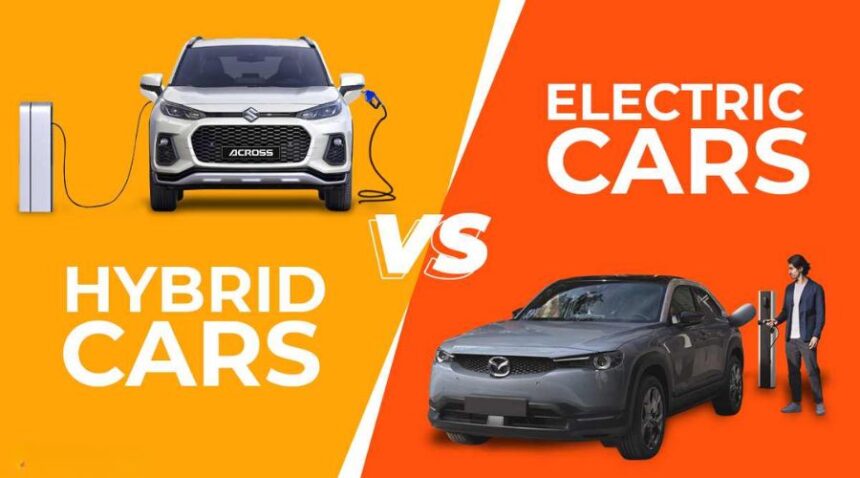
The transition to more clean mobility has brought about a new controversy among automobile purchasers: Do you go with a hybrid car or make a full electric car purchase? Both technologies are promising to achieve lower running costs and less emission but they operate in a very different way. And even as EVs are gaining popularity thanks to increasing charging networks and government subsidies, hybrids are still the safer option to those who need the convenience of long-distance travel but not the efficiency and range of EV power.
In case you are lost which one suits your life, this guide disaggregates the differences in a straightforward, practical, and helpful manner- so that you can make an informed choice, as per real life use, and not as per the marketing promises.
Understanding Hybrid Cars
A hybrid vehicle is a vehicle with a petrol engine and an electric motor. Electric motor is used to deal with low speed city driving and petrol engine aids in highway and long distance driving. In a hybrid car, the battery is automatically charged by process of regenerative braking hence you will never have to plug in the battery.
Such a combination of electricity and petrol makes hybrids superior in congested cities where they have the benefit of recharging the battery when the brakes are in use, resulting in efficiency. The hybrids such as the Toyota Hycross, Honda City Hybrid, and Maruti Grand Vitara Hybrid have demonstrated how a hybrid can provide you with an excellent fuel economy without altering your driving habits.
The Facts about Electric Cars
An electric vehicle (EV) is powered by a battery only. And no petrol engine whatsoever. EVs are silent, fast and smooth since electric motors provide instant torque. They also emit zero tailpipe emissions and hence are considerably cleaner than ICE and hybrid cars.
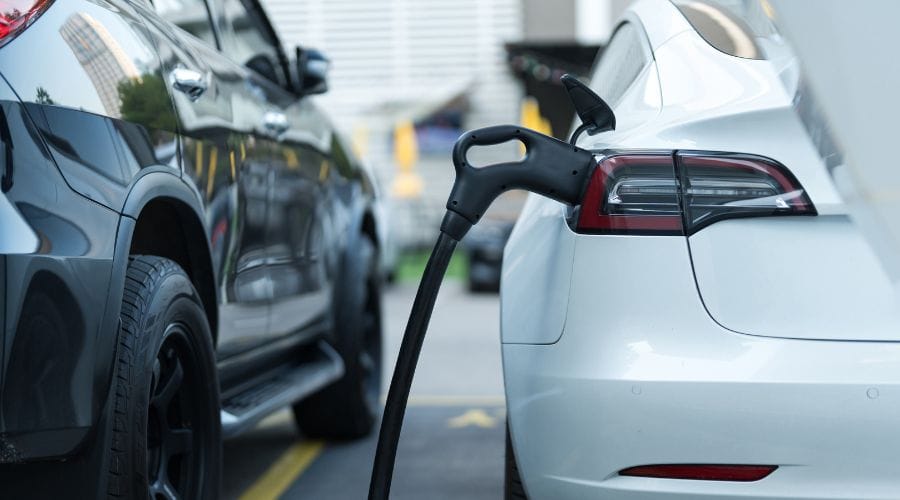
The only distinction is that EVs need to be charged, and this implies the presence of home charging stations or of fast-charging ones. As other brands such as Tata, Hyundai, MG, Kia, BYD, and Mercedes start to add EV products, the Indian EV market is increasing rapidly, but there remains quite a difference in charging convenience depending on your location.
Running Costs and Mileage: Which Costs Less?
Electric cars win by far when it comes to the cost of running on a daily basis. Recharging EV (particularly at home) is much less expensive than petrol purchase. The cost of EV driving even on long distances becomes cheaper with the growing quantity of fast-charging stations and the affordable costs of the charges.
Hybrids are however consistent in fuel efficiency without the need of chargers. Strong-hybrid has the capability of providing between 20-28 km/l, particularly during city traffic. This makes the hybrids more suitable to the customers who desire to save and do not stress on the recharging location.
Hybrids are still the smarter choice in case your home or apartment does not have a convenient way to charge it.
Driving and Performance Sense
Electric vehicles provide an exclusive driving experience. Since the motor responds instantly, even slow-speed overtaking respondents feel an EV is exceedingly responsive. The engine is powerful, quiet and elegant- ideal to use to commute daily.
Hybrids, in turn, are more like an ordinary petrol car, only less strict and efficient in nature. They alternate motor and engine with a smooth transition, however, they do not provide the quick acceleration that EVs do.
EVs have a definite plus in case you like strong and silent as well as future cars.
Long Distance Travel and Convenience
Hybrids continue to be superior in long-range journeys. Fueling up can be done anywhere in several minutes and be back on the road. EVs though are becoming better are yet to have planned charging points and not every highway has uniform speedy chargers throughout India.
Owners of EVs in the urban areas work in their vehicles comfortably on a daily basis but want to use petrol or hybrid cars during road trips.
Therefore, in case you have the habit of having long journeys on the highway, a hybrid is usually more convenient.
Maintenance and Reliability
Electric vehicles possess reduced moving components. It does not have an engine, gearbox, spark plug or exhaust system. That implies much reduced maintenance and reduced mechanical breakdowns. There are also 8-year or more warranties on a vast majority of EV batteries, which provide the buyer with peace of mind.
Hybrids are more complicated, because they have not only an engine, but also an electric motor, however, such manufacturers as Toyota and Honda have tested the reliability of hybrids over the years. Their maintenance is simple and forecastable, although the cost of the engine and battery costs in the long run may be greater than electric vehicles.
In general, EVs are the victors in terms of mechanical simplicity in the long run.
Environmental Impact
EVs are cleaner at the tailpipe- i.e. zero emission when driving. Emissions are much less with hybrids, though they are partly dependent on petrol. EVs offer more benefits to the environment, so they will be the solution in this case.
But again the overall environmental effect of an EV is also contingent on the way electricity is produced in your area. Despite this, EVs usually release lower lifetime emission as compared to hybrids.