
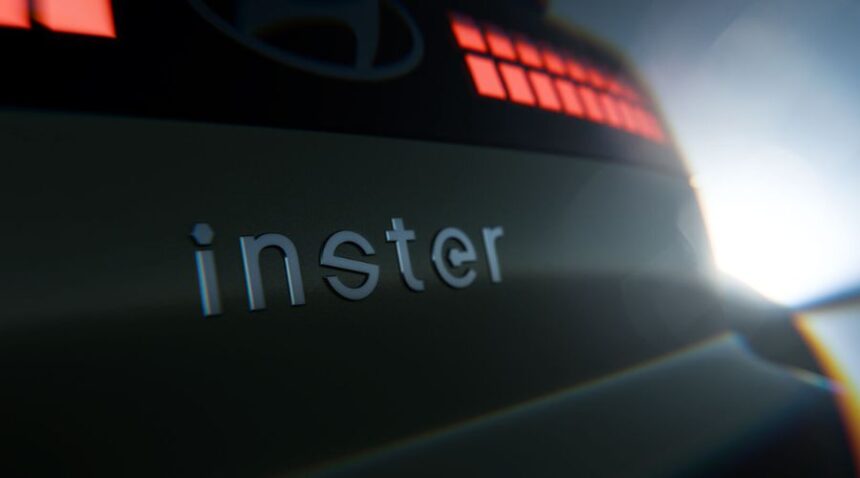
With India progressing continuously through the electric mobility drive-through, Hyundai is preparing to launch an electric small SUV that would reinvent the concept of owning an EV in the cities- the Hyundai INSTER. The new EV is presently a perfect combination of intelligent design, massive range, and utility that is compact but futuristic.
Though yet it is not officially introduced in India, Hyundai has already unveiled the INSTER in the world arena. Casper is a successful brand platform, and on that platform, the INSTER is based, with superior technologies in the battery, and the type of urban flexibility that Indian consumers are currently demanding.
What is the Hyundai INSTER EV?
The Hyundai INSTER is a sub-compact electric crossover that is aimed at integrating innovation and practicality in our every-day way of life. It is named after its two elements: intimately and innovatively, to show Hyundai the vision of making an electric car very small but with high capacity, approachable, and smart.
The INSTER has established itself globally as a low cost, high feature-seasoned electric car to urban and suburban commuters. It has a futuristic appearance, digital-based interior, and impressive range, which makes it compete with such vehicles as the Tata Punch EV, Citroen eC3, and MG Comet EV in India upon arrival.
Although these are the international statistics, localisation and homologation standards will probably differ in India specific figures.
Design and Exterior
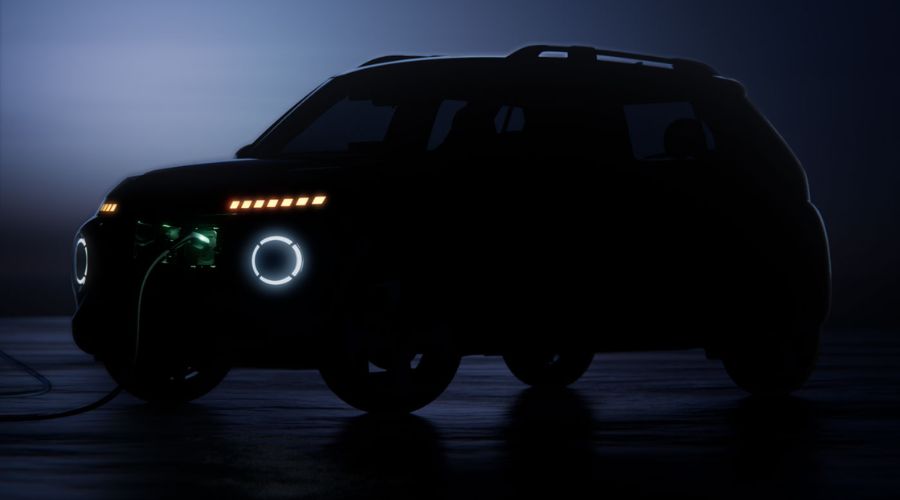
The Hyundai INSTER impresses the eye firstly by its original design language. It is short but big-bodied with circular LED headlamps complete with pixel-style daytime running lights, a closed front grille, and sporty wheel arches. The design is a combination of a futuristic touch and functionality this would be great to navigate through narrow urban areas without losing a premium road presence.
On the side, the SUV posture of the INSTER is evident in the high set body lines, roof rails, and wide fenders. It sits on slick alloy wheels and the rear has pixel-related LED tail lights that resemble those on the Hyundai Ioniq models which make it look like the family has an electric touch.
Interior and Comfort
Indoors, the Hyundai INSTER aims at making the most out of its tiniature size in terms of comfort and space. Cabin is basic but contemporary providing a digital dual-screen system – Digital instrument cluster and infotainment screen.
The application of recyclable and sustainable materials is in line with the hyundai global vision of EV. The chairs are also crafted to have superior visibility and comfort with the rear seats foldable to increase cargo space. Although it is small in size, the INSTER should offer a rather spacious interior, which is due to its ingenious packaging.
Notable features include:
- Two digital screens (10.25 inches each).
- Wireless Apple CarPlay and Android Auto.
- Smart touch interface climate control.
- Light background and individual interior themes.
- Several USB-Cs and wireless charging.
- Battery, Performance, and Range.
The two battery options of the INSTER support the various kinds of drivers. The standard 42 kWh is perfect on short city routes and the long-range model (49 kWh) is more suitable on long routes.
Power transmission is also fast and direct, as is characteristic of electric cars, and the generative braking makes the performance even more efficient in city traffic. A purported maximum range of 370 km on a single charge (WLTP cycle) is one of the highest in its category, making it energy efficient.
Another strength is charging. The INSTER only needs a 120 kW DC fast charger to recharge to 80 percent in approximately 30 minutes. In the case of home systems, the onboard charger of 11kW AC will be able to charge the vehicle in its entire power overnight.
Safety and Technology
The INSTER has a wide range of safety features fitted in Hyundai. These include:
- Six airbags
- ABS with EBD
- Electronic Stability Control (ESC)
- Hill-Start Assist Control
- Parking sensors and rear-view camera.
- Vehicle-to-Load (V2L) option which will enable you to charge the devices inside the vehicle.
Increased trims should also consist of Advanced Driver Assistance Systems (ADAS) like:
- Lane Keep Assist
- Blind Spot Monitoring
- Forward Collision Warning
- Adaptive Cruise Control
This will make sure the INSTER not only looks premium but also focuses on the safety of the occupants – which is becoming important to Indian EV buyers.
Projected Introduction and Cost in India
Although Hyundai is yet to make the India launch announcement, industry observers believe that the INSTER or its Indian version might make it by late 2026. Hyundai has also been rumored to be looking into local production to enable it to compete on prices.
When being localized the projected price point may lie between ₹15 lakh and ₹25 lakh (ex-showroom) which may place it in the same category as small EV SUV such as the Tata Punch EV, Mahindra XUV400, and MG ZS EV (lower trims).
Why It Is Important to Indian Buyers?
The Hyundai INSTER is not a simple electric car, it is a move towards making the high-end EV technology more affordable. The INSTER may be the ideal compromise of cost and a high feature-packed electric SUV at small size with high range and safety.
The fact that it fits well in tight spaces of the urban setting makes it suitable in the city, and the inclusion of other essential features such as V2L, rapid charging, and enhanced safety systems make it more practical. Provided that Hyundai can afford to introduce it to India at a fair price, the INSTER is soon going to become one of the popular among young urban workers and the first-time EV customers.
Final Thoughts
The Hyundai INSTER is also emerging into a small car with great expectations. Accompanied by the modern design, advanced features, and the solid range figures, it is supposed to fill the gaps between the entry-level EVs and high-end electric SUVs.
We still will have to wait to get confirmation on its launch date and final specification in India, but one thing is definite the INSTER indicates that Hyundai is keen on developing future affordable and practical electric cars.
With the appropriate price point and domestic manufacturing, it can easily become the new phenomenon in the small Indian electric SUV market.