
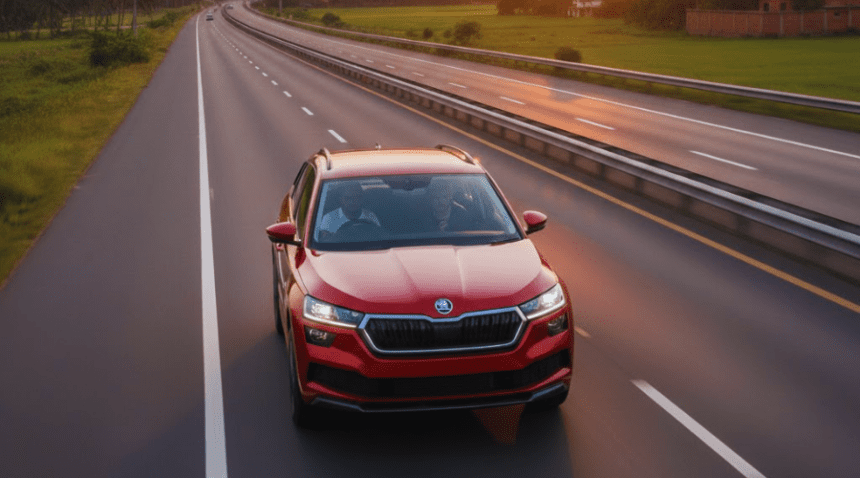
Ever wondered if that shiny new Skoda Kylaq in the showroom actually delivers its promised mileage? Those big brochure numbers don’t always match real-life city commutes in Bangalore or Delhi.
If you’re like me, you want to know how much you’ll actually spend on fuel when you’re stuck in traffic or driving on the highway. I’ve looked at real-world data and spoken with owners to get honest answers for you.
Skoda Kylaq Real World Mileage Breakdown (Approximate)
Let’s get straight to the numbers that actually matter. While the official papers might tell you that you can get nearly 20 km to a litre, the reality on the road is a bit different. Based on extensive testing and owner feedback from early 2026, here is the breakdown of what you can expect.
If you are driving the Manual version, your Skoda Kylaq mileage in city is likely to hover around 10-11 kmpl. It’s a bit of a reality check, isn’t it? However, once you hit the highway and keep a steady foot, that number jumps to about 14-15 kmpl.
For those of you who prefer the Automatic (the Torque Converter), the convenience comes with a small “tax” on your fuel. In heavy city traffic, you might see figures as low as 8-9 kmpl. On the open road, though, it’s quite a cruiser, giving you around 13 to 14 kmpl.
| Condition | Manual (1.0 TSI) | Automatic (1.0 TSI) |
| City Traffic | 10.5 kmpl | 8.8 kmpl |
| Highway Cruising | 14.8 kmpl | 13.5 kmpl |
| Mixed Driving | 12.0 kmpl | 11.0 kmpl |
Key Performance Drivers
The real-world mileage of your Skoda Kylaq is primarily driven by how the 1.0 TSI engine handles different load conditions, such as the extra effort required for automatic gear shifts or the strain of stop-and-go city traffic. Your personal driving style, particularly how gently you use the accelerator and how you manage the car’s momentum, plays a massive role in stretching every litre of fuel. Additionally, external factors such as heavy congestion and constant AC use in the Indian heat can significantly affect these figures, making it essential to understand them to achieve optimal efficiency in your drive.
Engine Behaviour
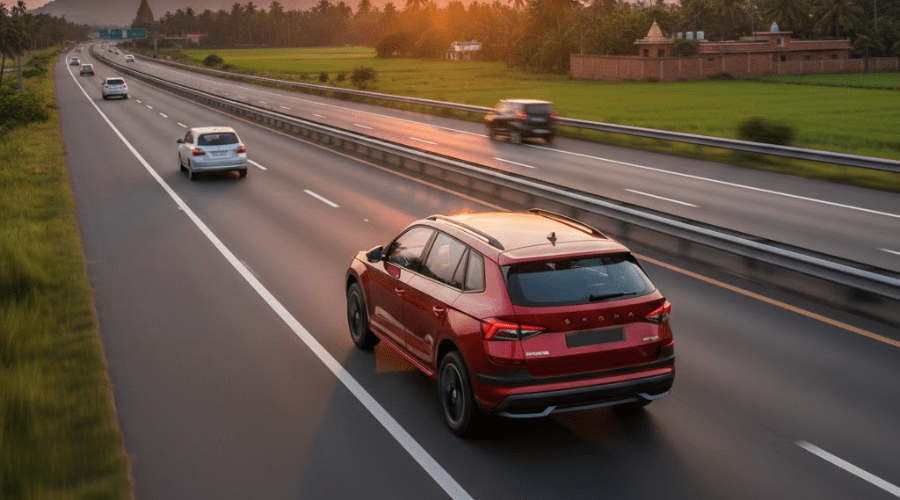
The Skoda Kylaq uses a small but punchy 1.0-litre turbo engine that behaves very differently depending on how hard you push it. This engine is like a marathon runner who loves a steady pace but gets tired if you keep asking them to sprint. In technical terms, it’s a “TSI” engine. When you drive gently, the turbocharger doesn’t have to work as hard, which saves fuel. But the moment you want that “fun” acceleration Skoda is known for, the turbo kicks in, gulps more air, and consequently, more petrol. I’ve noticed that if you keep the needle below 2,500 RPM, the car stays in its “happy zone” for efficiency.
AT vs. MT
According to the latest car industry news, the choice between a Manual (MT) and an Automatic (AT) gearbox is the biggest factor in your monthly fuel bill. I always tell people that if you want the best possible mileage, stay with the Manual. You can shift early and keep the engine relaxed. The Automatic in the Kylaq is a “Torque Converter.” It’s incredibly smooth and much more reliable than some other automatics, but it naturally uses more energy to shift gears. If you’re a city dweller who hates the clutch, the AT is a lifesaver, but you have to be okay with visiting the petrol pump a little more often.
Driving Style
Your right foot is actually the most important “feature” of the car when it comes to saving money at the pump. I’ve seen some owners get amazing numbers simply because they drive with a “light foot.” This means avoiding sudden “jackrabbit” starts at green lights and letting the car coast to a stop rather than braking hard at the last second. If you treat the accelerator like an on/off switch, your mileage will tank. But if you’re smooth and patient, you’ll be surprised at how much further a tank can take you.
Traffic Conditions
The “Stop-and-Go” nature of Indian cities is the natural enemy of any turbo-petrol engine like the one in the Kylaq. Every time you stop at a light, your mileage is technically zero. While the Kylaq has a clever “start-stop” system that shuts off the engine on signals to save fuel, the heat in India means the engine often has to stay on just to keep the AC running. In bumper-to-bumper traffic, the engine is constantly working to get a 1.2-ton SUV moving from a standstill, which is the most fuel-intensive task it performs. This is why your city numbers look so different from your highway ones.
Final Thoughts
Finding the sweet spot for your Kylaq’s mileage really comes down to understanding how you and the car work together. While the Skoda Kylaq mileage in city might test your patience and your fuel gauge, the 1.0 TSI engine proves its worth with impressive efficiency once you hit the open highway. By choosing the right gearbox for your lifestyle and maintaining a smooth, steady driving foot, you can easily keep your running costs in check. Ultimately, the Kylaq offers a balanced mix of European performance and practical fuel economy for your daily commute in India.
FAQ
1. Is the Skoda Kylaq mileage better than the Tata Nexon?
A. In the real world, they are very close. The Nexon’s turbo-petrol engine usually delivers similar city figures, but the Kylaq often feels a bit more efficient on long highway stretches thanks to its aerodynamic shape.
2. Does the AC affect the mileage significantly?
A. Yes. In our hot climate, the AC works very hard. Keeping it on a moderate setting (like 23 or 24 degrees) rather than the lowest possible temperature can actually save you a bit of fuel over a long trip.
3. What is the best speed for high mileage on the highway?
A. From what I’ve tested, keeping the Kylaq between 80 kmph and 90 kmph in 6th gear is the “sweet spot.” Once you exceed 100 km/h, wind resistance increases, and the engine has to work harder, reducing efficiency.
4. Will the mileage improve after the first service?
A. Usually, yes. Brand new engines are “tight” and have more friction. After the first 2,000 to 5,000 km, the parts settle in, and many owners report a small increase of 1 or 2 kmpl.
5. Should I use premium petrol for better mileage?
A. The Kylaq is designed to run on regular 91-octane petrol. While “premium” fuels contain cleaning additives, you won’t necessarily see a significant increase in mileage. It’s better to stick to a trusted, high-volume petrol pump instead.