


Are you wondering whether 2026 is the right time to buy a car in India, or if prices will only get worse from here? I’ve been thinking about the same thing lately, and honestly, it’s not as simple as it used to be.
You might notice one model getting cheaper while another suddenly becomes expensive. That’s because a lot is happening behind the scenes: government decisions, rising costs, and changing technology.
In this guide, I’ll walk you through everything in a simple, relatable way so you can actually understand what’s going on and make a smart decision.
Key 2026 Price Drivers & Government Impacts
This is where everything comes together: rising costs push prices up, while government policies try to bring them down. Car prices in 2026 are basically a battle between what’s getting expensive and what’s being made affordable for you.
Rising Costs (Upward Pressure)
Indeed, if you are getting the impression that prices of cars seem to have silently risen, then you are right. The price hike continues in 2026. Firstly, due to rising raw material costs such as steel and aluminum, the cost of manufacturing a car has increased. Additionally, transport and fuel charges have risen, further increasing production costs for companies.
However, what I find intriguing is that although companies have the opportunity to lower prices due to tax benefits, they usually use them to offset rising expenses. As a result, you get the impression that prices are not reducing. Moreover, in many instances, car prices have increased slightly by 2-3% over the year. Though this may not be much, it makes a significant impact on your purchasing experience.
GST 2.0 Reform (Downward Pressure)
Now, this is where things start to look a bit positive. According to the latest car news India, the government’s modifications to the GST structure have actually made it cheaper to own cars, particularly smaller ones. There have been cuts in the tax applied to certain entry-level cars, which has enabled their prices to be reduced. Those individuals planning to purchase an affordable hatchback or small sedan will benefit from this scenario, as there are price reductions across various car models.
The increase in sales figures reflects this trend. What you need to understand is that it does not affect all types of automobiles uniformly. There has been an increase in taxes on luxury cars and larger cars. In some cases, their cost has increased more than ever. This is good news only in the context of GST reforms; otherwise, it would be unfair to ignore this issue.
EV Focus (Lowering Costs)
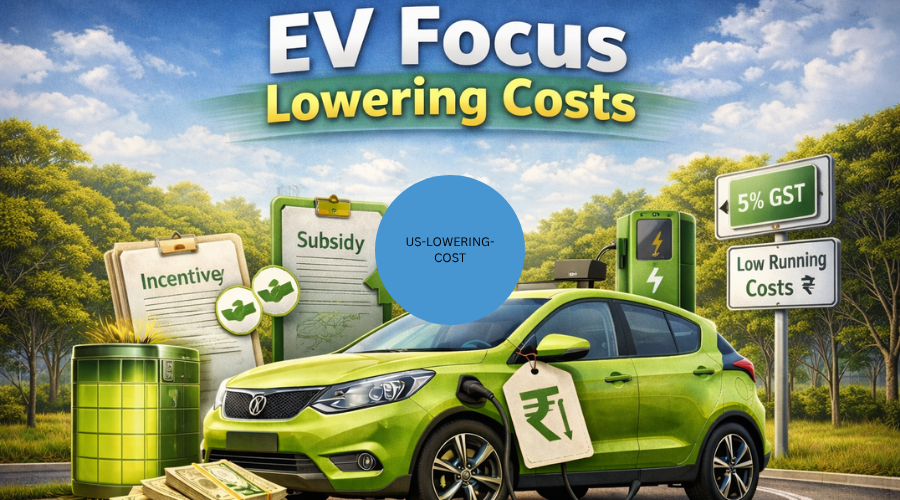
In my view, this is a crucial change taking place in our country. The use of electric cars is now a reality, and they are available to ordinary people. The government has been supporting the adoption of electric cars and has done everything possible to lower their prices through various policies. The first thing about an electric car is its tax rate. Compared to petrol- or diesel-powered automobiles, electric cars have much lower tax rates.
What’s even more interesting is that the government is also working behind the scenes to reduce the car prices in 2026 by encouraging local manufacturing and lowering import duties on key components, such as batteries. Because of all this, EV prices are slowly becoming more reasonable. They might still feel expensive upfront, but when you consider extended savings, like lower operating and maintenance costs, they start to make a lot more sense. I’ve noticed that more people are seriously considering EVs now, not simply as an alternative, but as their first choice.
Import Duties
This may not be a commonly discussed factor, but it plays an important role behind the scenes in determining the prices you have to pay. An import duty is a tax levied on any vehicle or component imported from outside India. Import duties are relatively high, especially on complete imports, which explains why luxury cars are so expensive.
On the one hand, it intends to inspire businesses to produce automobiles in India. However, to cut production costs, particularly for electric vehicles, it is gradually reducing taxes on specific components. For you, this implies that locally made automobiles will likely remain less expensive than those made abroad. In the coming years, prices, particularly for EVs, may gradually decrease as India’s industry becomes increasingly self-sufficient.
Manufacturer Price Adjustments
Over time, I’ve come to recognize that government car policy impact aren’t the only factor influencing auto pricing. What you ultimately pay mainly depends on the automakers themselves. Manufacturers frequently raise prices to cover rising costs or to preserve profits, even when taxes are lowered. Thus, you may encounter a scenario in which a car’s price drops as a result of a tax decrease, but the corporation later modifies its pricing, making it slightly more expensive once more.
It’s somewhat of a balancing act. Companies also take demand into account; if a certain model is selling well, they cannot give significant discounts. However, you may get greater prices and deals if sales slow down. Because of this, pricing can at times seem unstable.
Key Takeaways for Consumers
Don’t worry, you’re not alone if you’re feeling a little confused by everything. There are many chances and challenges in the 2026 car market, and your demands will ultimately decide which option is best for you. Smaller automobiles seem to be more affordable right now due to tax advantages. This can be an excellent moment to acquire something useful and affordable. However, if you’re considering larger SUVs or high-end vehicles, you should budget more.
Electric vehicles are slowly becoming a strong option. According to the recent car news India, if you’re thinking long-term and are open to change, they might actually save you money over time. At the same time, it’s important to remember that prices are unlikely to drop drastically anytime soon. In fact, gradual increases are still very much possible. So instead of waiting endlessly for the “perfect time,” it might be smarter to focus on getting the right deal when you’re ready. Festive offers, discounts, and exchange bonuses can still make a meaningful difference.
Final Thoughts
2026 is a year of transformation, if I were to sum it up for you. You and I are in the midst of a transition in which government car policies impact are shaping the future, and both traditional cars and electric vehicles are competing for attention. There is no longer a solution that is applicable to all. The best option will depend on your spending limit, how you use the vehicle, and how long you intend to retain it. One thing is certain, though: knowing what goes on behind the scenes offers you an advantage.
FAQ
1. Will car prices go down in 2026?
A. Not completely. Some smaller cars have become cheaper due to tax cuts, but rising costs mean overall prices may still increase slightly.
2. Is it a good time to buy a car in 2026?
A. Yes, if you find a good deal. Waiting too long might not help much, since prices are slowly rising across many segments.
3. Are electric cars cheaper than petrol cars now?
A. Honestly, they can still be expensive, but lower taxes and running costs make them more affordable in the long run.
4. Why are SUVs getting more expensive?
A. Higher taxes and increased manufacturing costs are making bigger vehicles like SUVs costlier than before.
5. Should I wait for more price drops in the future?
A. Honestly, big drops are unlikely. It’s better to focus on current offers and choose what fits your budget now.