
And with Hyundai Legacy Creta, in the unlikely event that it would become pure electric, it would have to feel just as familiar, yet outrageously modern. Introduce Hyundai Creta EV 2025, the biggest step Hyundai Motor India has yet made into the mainstream EV-SUV market. It does not only mean reducing the level of emissions: its design, performance, and features are comparable to ICE Creta, meaning this EV is set to really elevate what compact SUVs can accomplish.
Reading through the entire background of the key details, expectations, and what the Creta Electric may represent in the future of EVs in India, you will find it worthwhile to know why the Creta Electric has the potential to become a game changer and whether it is right to you or not.
Expectations of the Creta EV
The Creta EV was officially released in India by Hyundai in January 2025, and it is now a mass-market electric car, not a niche luxury car. Instead of developing an entirely new platform, Hyundai has adapted the popular chassis, Creta, to EV components. This will assist in keeping the interior space of the Creta recognizable yet at the same time maintain a more competitive price point which is a brilliant idea in a price sensitive market.
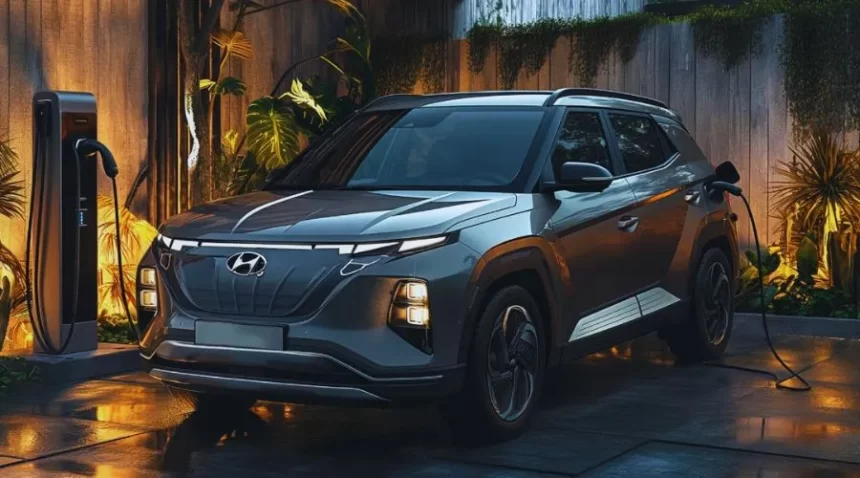
The design remains familiar to you with Creta still, yet EV touches include blanked-out grille, more aerodynamic bumpers, pixel-like LED lighting and new alloy wheels more efficient. Roof rails and rough-looking cladding imply that Hyundai has not forgotten the adventurous nature of the Creta.
Powertrain/ Range: Two Battery Choices, Serious Potential
Among the strongest arguments of the Creta EV is the fact that Hyundai has two options of battery pack:
- A 42 kWh pack, which has a purported certified range of about 390 km under Indian test conditions.
- The 51.4 kWh pack, which has an estimated range of approximately 473 km, is larger and makes it competitive with long-range EVs.
The larger pack will be able to provide the Creta EV with approximately 126 kW of power (approximately 171 PS) to perform appropriately in everyday driving and highway task forces. Hyundai has also incorporated drive modes (Eco, Normal, Sport) and high-power regenerative braking through a correspondingly connected ADAS system, which contributes to the maximum efficiency and safety.
Charging wise, the Creta EV has both AC and DC charging: a home 11 kW wall charger requires an approximate of 4 hours to charge the smaller battery between 10 percent and 100 percent, whereas DC fast charging can charge the battery between 10 percent and 80 per cent in less than an hour, which makes it highly practical on weekends or during the commute.
Interior & Technology: Home Like but Electric-Ready
It is immediately like a Creta inside but smarter than the EV. It has two big digital instrumentation and an infotainment touchscreen measuring 10.3-inches (both EV-friendly) and displaying real-time energy usage. Apple CarPlay and Android Auto are both standard, and there are several USB-C ports, phone wireless charging and a digital shift-by-wire drive select that frees up console space.
The Hyundai has also cleverly used materials: some of the upholstery is environmentally friendly, and the fabrics and artificial leather combinations are recycled. Nor is comfort sacrificed – you will discover such features as ventilated front seat, panorama sunroof, and cooled glove box. To be practical there exists a small front trunk (frunk) as well as the standard boot of Creta and it is the case that this EV cabin is both practical and high end.
Safety & Driver Assistance
Hyundai still considers safety in the Creta EV. It is equipped with Level 2 ADAS where it has adaptive cruise control, lane-keep assist, automatic emergency braking and rear cross-traffic alert. Hyundai also combines regenerative braking and driver assist to ensure that the process of energy recapture is maximised without sacrificing the safety or the ride comfort.
In terms of crash protection, the battery pack of the Creta EV is placed in an reinforced underbody and it has the same structural rigidity as the ICE Creta, which means that it provides a good crash protection. The Hyundai testing plan indicated to have EV battery safety (thermal management, crash resistance) and therefore customers can be sure of the performance and safety of the automobiles.
Price, Variants and India Market Strategy
Hyundai has made the Creta EV very affordable in the Indian market of electric SUV. The ex-showroom price is ₹17.99 lakh, which is projected on the sweet spot: it is high enough to be aspirational but affordable to a wide target audience of EV buyers.
The strategy that Hyundai seems to have is to go efficiency in EV adoption: rather than introducing a small luxury SUV, the company builds on a high-volume nameplate (Creta) that is already widely known to the person. With the development of its EV ecosystem, including an increase in the number of chargers, service availability, battery technology, this EV can be one of the keystones of the Indian EV portfolio of Hyundai.
In case the demand is high, Hyundai can increase the coverage to additional cities, leasing or battery- subscription options, and introduce battery-service relationships within the framework of its long-term EV roadmap.
Pros & What to Watch
Why the Creta EV could be a hit:
- Good range of EVs makes it convenient to travel on a daily basis and over the weekends.
- Recognizable brand and design make the aspirational buyers cut the barrier to adoption.
- Such functions as V2L (vehicle-to-load) (when it is provided) might make it a power bank of devices.
- Competitive pricing exercise renders it one of the cheaper premium EVs in India.
Risks or trade-offs:
- Depending on the driving style and climate, the range can be less than the stated figure in the real world.
- Fast DC charging infrastructure, and potentially charging infrastructure, is not necessarily pervasive everywhere.
- Service of EV, especially battery, may be very expensive during the initial years.
- EVs in this price category are yet to realize resale value.
Final Thoughts
The Hyundai Creta EV 2025 is not only an electric Creta but is Hyundai’s concept of mass-market EV mobility, combined with utility of an SUV, brand confidence, and intelligent design. Hyundai can enter a very competitive player in the future of EVs in India provided it plays its cards right, and that is in terms of scale of production, the service network, and charging ecosystem.
It is a special moment to the buyer: an SUV the buyer recognizes, but reinvented in electric time. Considering EV but need a space, style as well as usability, the Creta EV is worth consideration.
FAQ
Q. What is the next Creta 2025?
A. When the Creta EV debuts in January 2025, it will compete with the Mahindra XUV400, Tata Curvv EV, MG ZS EV, and the soon-to-be Maruti Suzuki e Vitara.
Q. What is the battery capacity of Creta EV?
A. The battery capacity of the upcoming Hyundai Creta Ev is anticipated to be 45kWh.
Q. What is the Hyundai Creta EV range?
A. A single electric motor and a 60kWh battery pack might power the mid-size SUV. On a single full charge, it should have a 500 km range.
Q. How long does it take to charge a Hyundai Creta EV?
A. A Creta EV can be 100% charged in 6 hours 16 minutes through an A.C Charger. However, it takes only 57 minutes to charge from 0 – 80% utilizing a 50 kW D.C Charger.
Q. What is the top speed of a Hyundai EV car?
A. The top speed of A Hyundai EV car is 185 kmph.